
 Available in US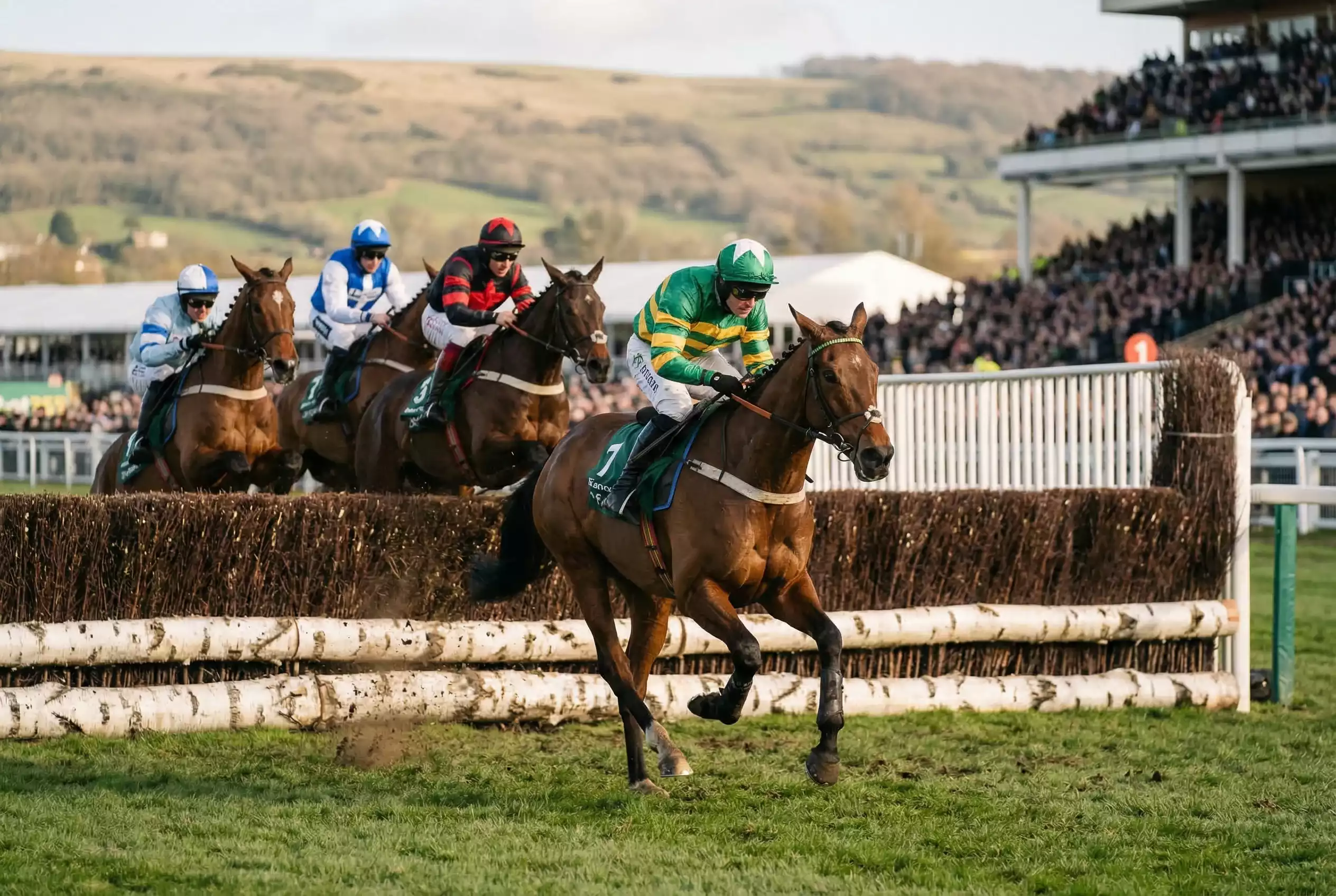
Four days in March. Twenty-eight races. Nearly 230,000 spectators cramming into the Cotswolds hills. Cheltenham Festival isn’t merely jump racing’s flagship event—it’s the annual examination that separates genuine class from flat-track bullies, and separates the shrewd punter from the hopeful.
The betting volume tells its own story. During the 2024 Festival, Flutter Entertainment recorded nearly 35 million bets placed through its brands alone—Paddy Power, Betfair, Sky Bet—with over 2.5 million active users averaging roughly fourteen wagers across those four days. This isn’t casual dabbling. Cheltenham demands engagement, from the opening Supreme Novices’ Hurdle on Tuesday to Friday’s Gold Cup climax.
What makes the Festival particularly compelling for bettors is the concentrated quality. These aren’t average midweek handicaps—they’re Grade 1 championship events where the best horses from Britain and Ireland collide. That quality brings both opportunity and trap. The form is deeper, the prices sharper, and the margins for error narrower. This guide breaks down the key races, the enhanced terms worth hunting, and the strategic approaches that can make your Cheltenham week profitable rather than merely memorable.
Cheltenham Festival Betting Guide — More on this topic at horse racing bets explained.
Key Races for Bettors
The Festival programme runs to twenty-eight races, but a handful carry outsized significance for the betting public. Understanding these flagship events—and their distinctive characteristics—shapes where you focus research and stake allocation.
Champion Hurdle (Tuesday)
The two-mile hurdle championship opens the Festival proper. This race rewards speed combined with jumping accuracy, and historically favours proven championship performers over improvers stepping up in class. Irish challengers have dominated recent renewals, making trainer statistics particularly relevant. The relatively small fields (typically twelve to sixteen runners) mean standard place terms apply, so this is generally a win-only proposition unless you’re backing a genuine outsider.
Queen Mother Champion Chase (Wednesday)
Two miles over fences at a relentless gallop. This race produces some of the Festival’s most spectacular racing—and most spectacular fallers. The premium on jumping accuracy cannot be overstated. A horse that lacks fluency at Cheltenham’s fences, with their stiff birch and testing terrain, will be found out regardless of its ability on better ground elsewhere. Check course form rigorously; the New Course configuration used for the Champion Chase is unforgiving.
Stayers’ Hurdle (Thursday)
Three miles of hurdles that often becomes a war of attrition. Stamina trumps class here, and closers who can produce a turn of foot late in the race have a pronounced advantage. The Stayers’ tends to attract more competitive fields than the two-mile championship, creating each-way opportunities. Horses proven over the trip at Cheltenham deserve particular respect—the undulating track saps stamina faster than flat tracks elsewhere.
Cheltenham Gold Cup (Friday)
The race that defines careers. Three miles and two furlongs over fences, the Gold Cup asks every question of horse and jockey. It’s typically the race where casual money floods in, particularly on short-priced favourites, which can create value elsewhere in the market. The pattern tends toward strong stayers with proven Grade 1 form, but upsets happen when conditions favour a particular running style. Ground matters enormously—horses with heavy ground form in their profile gain significant advantage if the weather breaks during Festival week.
The Big-Field Handicaps
Beyond the championship events, several handicaps attract massive fields and correspondingly enhanced each-way terms. The Boodles Handicap Hurdle, Coral Cup, and Grand Annual offer large fields where bookmakers frequently extend to five or six places. These races are notoriously competitive—win-only is a hiding to nothing—but the place dividends at 1/4 or 1/5 odds can deliver solid returns from horses trading at 20/1 or longer. Form analysis matters less here than identifying horses with the right profile: improving types, course specialists, and horses unexposed at the distance.
Cheltenham Place Terms
Each-way betting surged in popularity by 25 percent at the 2024 Festival compared to the previous year, according to industry analysis from Receptional. That growth reflects punters recognising the value proposition in big-field handicaps where enhanced terms transform the mathematics. For context, total attendance reached 229,999 across the four days—down from the 2022 peak of over 280,000, but the betting engagement remained intense.
Standard place terms for British racing depend on field size: two places (at 1/4 odds) for five to seven runners, three places (at 1/5 odds) for eight to fifteen runners, and four places (at 1/4 odds) for handicaps with sixteen or more declared. Cheltenham’s championship races typically fall into the three-place bracket—useful if you’re backing an outsider, but the fractions aren’t generous.
The real each-way value emerges in handicap hurdles and handicap chases. The Boodles, Coral Cup, County Hurdle, and Grand Annual routinely attract twenty-plus runners, triggering standard four-place terms. During Festival week, however, bookmakers compete aggressively for custom by extending to five, six, or even seven places on selected races. These enhanced offers usually apply to the biggest handicaps on each day.
Finding these offers requires comparison. Operators announce their Festival specials in the weeks before March, and the terms vary significantly. One firm might offer five places on the Coral Cup; another offers six places but at tighter fractions. The mathematically optimal approach depends on your selection’s price. At longer odds (20/1 and above), extra places matter more than fraction improvements. At shorter prices (8/1 to 14/1), the fraction difference becomes more significant.
Enhanced place terms don’t guarantee profit, obviously. They shift the mathematics in your favour, particularly when backing horses at double-digit prices who have realistic place claims but limited win prospects. The canny move is identifying races where field size practically guarantees competitive finishes—large handicap hurdles typically produce closer results than small-field championship events where a dominant favourite pulls clear.
Festival Betting Strategy
Cheltenham punting splits into two phases with different risk-reward profiles: ante-post and day-of-race. Your approach to each should differ fundamentally.
Ante-Post: The Value Window
Prices typically shorten as Festival week approaches, meaning the best value often comes months in advance. A horse trading at 16/1 in January might be 8/1 by raceday if its prep runs go well. The tradeoff is non-runner risk—most ante-post bets are stakes-lost if your selection doesn’t run. This suits well-fancied horses from major yards where withdrawal is unlikely, less suited to fringe contenders who might be rerouted to easier targets. Some bookmakers now offer Non-Runner No Bet ante-post markets on specific Festival races. The prices are shorter, but the insurance has value if you’re backing anything below the market leaders.
Day-of-Race: Information Advantage
By Tuesday morning, you know the ground, the final declarations, and the jockey bookings. Over 80 percent of Festival bets were placed via mobile in 2024, which makes sense—conditions change fast, and flexibility matters. The morning markets often react to overnight news: ground changes, stable confidence, and market whispers. If you’ve done ante-post homework, race morning is about confirming rather than discovering. Key variables include the official going (particularly any switch toward soft or heavy), the draw in certain races where course configuration creates bias, and any late trainer comments suggesting peak fitness or otherwise.
Budget Management
Twenty-eight races across four days creates genuine danger of overextension. The temptation to back something in every race leads to diluted stakes and chasing losses by Thursday afternoon. A more disciplined approach: identify your strongest fancies beforehand, allocate stakes accordingly, and accept that some races don’t offer value at the prices available. The Festival will return next year; your bankroll might not if you punt indiscriminately. Each-way doubles and cross-race multiples can extract value from two selections without requiring four consecutive winners, but complexity increases losing scenarios. Keep structures simple enough that you can calculate outcomes mentally without reaching for a spreadsheet.
See also Grand National Betting Guide.
