
 Available in US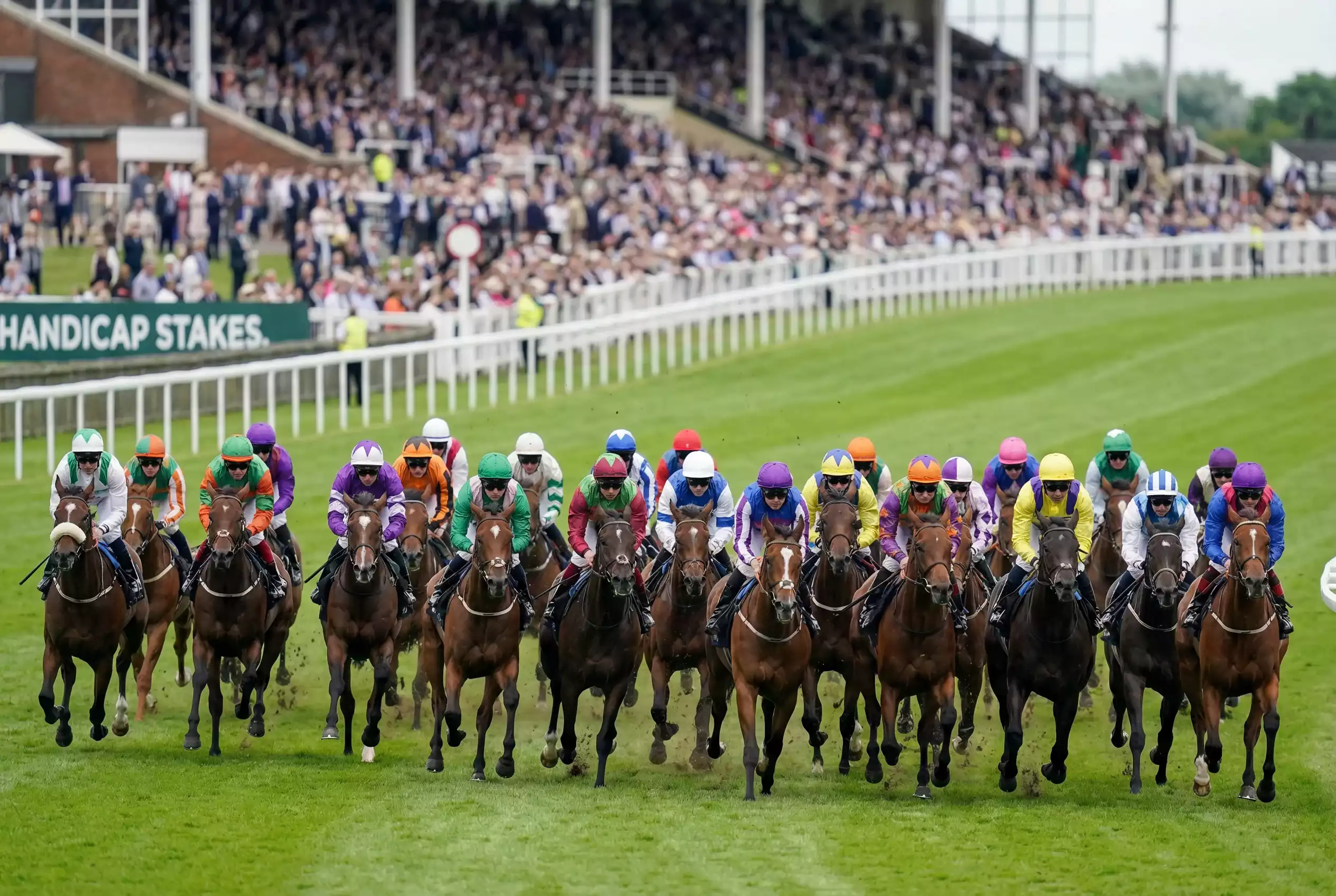
Handicap racing exists to create competitive, unpredictable races. Instead of the best horse winning every time, handicaps assign weight based on ability—stronger horses carry more, weaker horses carry less—theoretically giving every runner an equal chance. The result is closer finishes, larger fields, and betting opportunities that don’t exist in conditions races where class dictates everything.
The British Horseracing Authority’s handicapping team assesses every horse that has run three times, assigning an official rating. This rating determines the weight carried in handicap races. The system works well enough that big-field handicaps routinely produce blanket finishes, with several horses crossing the line within lengths of each other. Each-way betting popularity surged by 25 percent at the 2024 Cheltenham Festival according to industry data from Receptional, reflecting punters’ appreciation for handicap value.
Understanding how the handicap system works—and where it creates opportunities for informed bettors—opens up a substantial portion of the racing calendar. The majority of horse races in Britain are handicaps. Learning to read them properly transforms your betting options.
Handicap Racing Explained — More on this topic at horse racing bets explained.
How Handicapping Works
Every horse with three or more qualifying runs receives an official rating from the BHA handicapper. This rating, expressed as a number (typically between 0 and 175 for flat racing, higher for exceptional jump horses), represents the handicapper’s assessment of the horse’s ability.
Ratings to Weights
In a handicap race, the horse with the highest rating is assigned the top weight (maximum weight the race conditions allow). Other horses carry less weight according to their ratings relative to the top weight. The formula is straightforward: one pound of weight equals one rating point. If the top-rated horse is rated 100 and carries 10 stone (140 pounds), a horse rated 90 carries 10 pounds less at 9 stone 4 pounds.
This conversion creates the levelling effect. Higher-rated horses proved their superiority previously, but the additional weight theoretically neutralises that advantage. A horse running off 85 against a horse rated 95 gives away 10 pounds—roughly equivalent to several lengths over most distances—which should bring their chances into alignment.
Ratings Bands
Handicap races are structured into bands to prevent mismatches. A Class 2 handicap might accept horses rated 0-90; a Class 5 might require 0-55. These bands ensure reasonable competition within each race while preventing top-class horses from racing against modest platers.
The bands also create transitions. A horse rated 56 might compete at the top of Class 5 handicaps or struggle at the bottom of Class 4. Understanding where a horse sits within its band—top, middle, or bottom—affects its chances more than the raw number suggests.
Rating Adjustments
Ratings change after performances. Win impressively and the handicapper raises your rating; lose consistently and it drops. The handicapper aims to capture true ability, but horses improve (or decline) between assessments. This lag creates opportunity—and the core of handicap betting analysis.
Horses can only enter handicaps once they’re rated. Maiden winners typically receive initial ratings after their first win, then refine through subsequent runs. Horses imported from abroad receive ratings based on foreign form, which sometimes misreads true ability in either direction.
Why Higher-Rated Carry More
The logic is intuitive: better horses proved themselves better by winning or running well previously. The weight compensates for that proven class advantage. Without handicaps, the same few horses would win repeatedly. Handicapping creates fluid, competitive racing where any horse might prevail if conditions align—ground, trip, tactics, and luck combining to overcome whatever rating differential exists.
Finding Handicap Value
If handicapping worked perfectly, every horse would have identical chances and betting would be coin-flipping. Fortunately for bettors, handicapping is imperfect. Ratings lag behind improvement, miss subtle form indicators, and occasionally misjudge foreign imports. These imperfections create value.
Well-Handicapped Horses
A horse is “well-handicapped” when its current ability exceeds what its official rating suggests. This happens in several scenarios. The horse improved significantly in its last run but the handicapper hasn’t yet adjusted. The horse is returning from a break during which training has enhanced its condition. The horse drops in class after competing against superior animals, making today’s opposition relatively weaker.
Identifying well-handicapped horses requires comparing what you believe the horse can achieve against what the handicapper believes. If you think a horse running off 78 should really be rated 85, you’ve spotted potential value. The market may or may not have noticed the same thing.
Improvers
Young horses—particularly three-year-olds and lightly raced four-year-olds—improve naturally with racing. Their ratings chase their ability upward, but the chase takes time. An improving horse whose rating rises 4 points after a win might actually have improved 7 points. Backing improvers early in their upward trajectory captures value before the handicapper catches up.
Signs of improvement include: reduced margins of defeat, stronger finishing efforts, higher finishing positions despite rising ratings, and positive comments from trainers about the horse’s development.
Class Droppers
Horses stepping down in class face weaker opposition. A horse rated 80 competing in a 0-90 handicap faces animals up to 10 pounds better on ratings; the same horse in a 0-80 handicap tops the weights but faces nothing superior. Class droppers often find winning easier despite carrying top weight.
Weight-for-Age Adjustments
Younger horses receive weight allowances against older horses, reflecting their natural development disadvantage. A three-year-old in September carries less than a four-year-old of identical rating. As the season progresses, these allowances shrink—three-year-olds “come into themselves” and need less help. Timing campaigns around weight-for-age benefits provides edge.
Betting on Big Handicaps
Premium fixtures saw turnover rise 1.1 percent in 2025 even as overall betting volume declined, reflecting punters’ continued appetite for quality racing. Big-field handicaps at major meetings—the Chester Cup, Ebor, Cesarewitch, Cambridgeshire—attract intense betting interest and offer enhanced each-way terms that transform the mathematics.
Each-Way in Large Fields
When handicaps attract twenty or more runners, standard place terms extend to four places at quarter odds. Many bookmakers enhance further during high-profile races, offering five, six, or even seven places. This creates genuine each-way value for horses with place claims at longer prices.
A horse trading at 25/1 in a 30-runner handicap with seven places offered has meaningful place expectations. If it finishes seventh, the each-way bet returns the place portion at 25/4 (6.25/1), which still delivers profit on the original stake. Win-only betting in such races concentrates risk unnecessarily when place terms provide soft landings.
Field Size Dynamics
Big handicaps favour certain profiles. Front-runners need early speed to avoid traffic; hold-up horses need clear runs through packed fields. Draw bias matters more as field size increases—thirty horses on a straight course amplify stall advantages that twelve horses might obscure. Check draw statistics for the specific course and distance, particularly recent runnings of the same race.
Famous British Handicaps
The Chester Cup (early May, Chester) runs over two miles two furlongs on Chester’s tight turns—stamina specialists with nimble handling excel. The Ebor (August, York) covers a mile six furlongs and attracts quality handicappers stepping up from Group company. The Cesarewitch (October, Newmarket) tests two miles two furlongs of Newmarket’s Rowley Mile—genuine stayers only. The Cambridgeshire (September, Newmarket) runs a mile one furlong and produces annual shock results.
Each race has distinctive characteristics. Studying previous runnings reveals patterns—draw biases, winning profiles, trainer trends—that inform current selections. These heritage handicaps return annually; the homework compounds.
See also Responsible Gambling UK.
