
 Available in US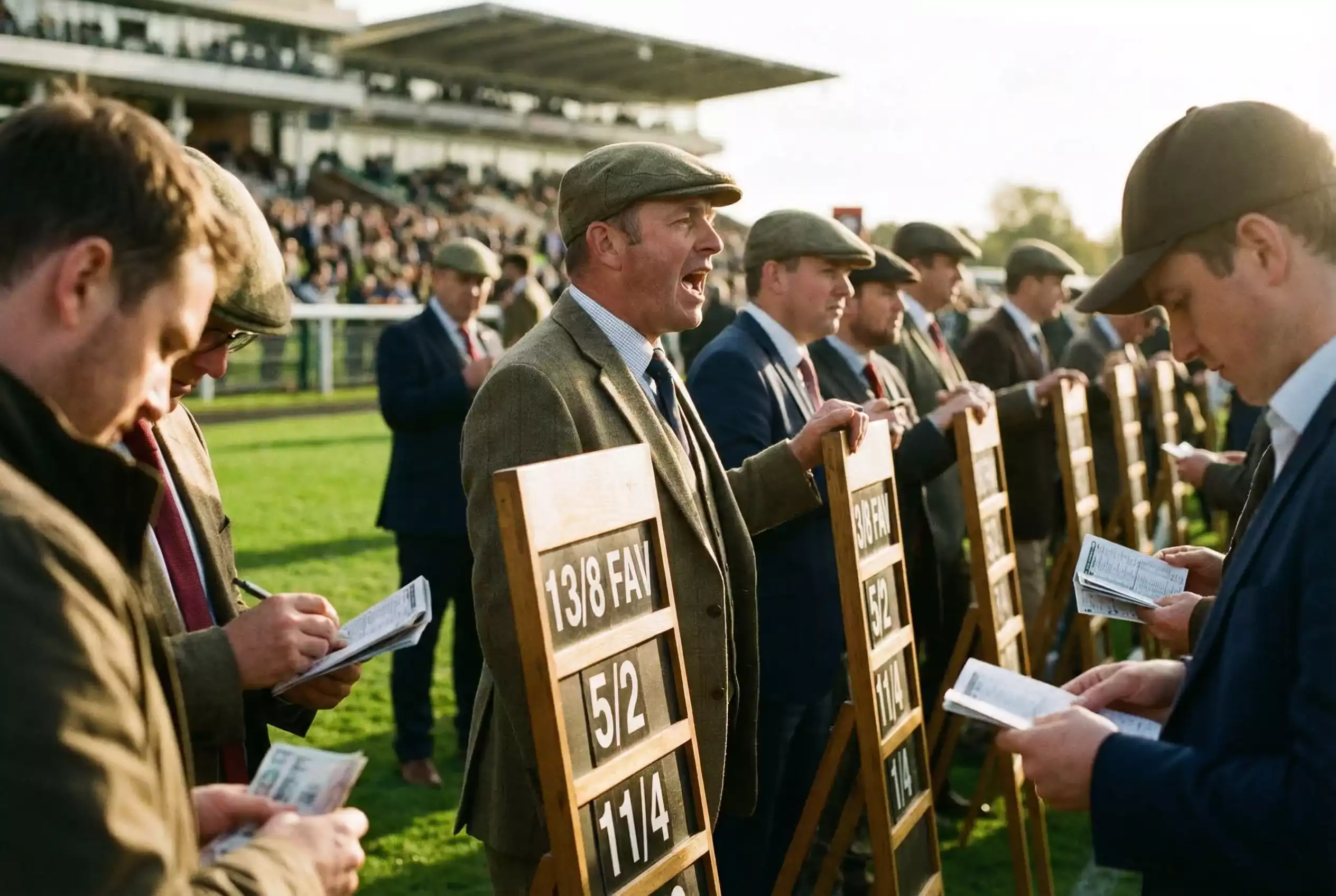
Introduction
Every horse race in Britain ends with a Starting Price, yet most punters only encounter it when their betting slip reads “SP” and they wonder whether that was the right choice. The Starting Price is the official odds at the moment the race begins, serving as the industry’s definitive benchmark when bets need settling. If you place a bet without locking in a price, or if your chosen odds are no longer available, the SP becomes your settlement figure.
Understanding how this number emerges matters because it directly affects your returns. The SP isn’t plucked from thin air or dictated by a single bookmaker. Since 2004, it has been determined by the Starting Price Regulatory Commission, an independent body that calculates the official price using a transparent methodology. Whether you’re backing an odds-on favourite in a maiden race or taking a punt on a 25/1 outsider at a big festival, the SP calculation follows the same rigorous process.
Starting Price (SP) Explained — More on this topic at horse racing bets explained.
How SP Is Calculated
The Starting Price emerges from what happens on the racecourse betting ring in the minutes before a race. On-course bookmakers display their prices on boards, adjusting them as money comes in from punters at the track. These prices are sampled by representatives of the Starting Price Regulatory Commission, who collect data from a defined group of bookmakers standing at the rails.
The methodology itself is elegantly simple. All sampled prices are arranged in order from the longest odds to the shortest. That list is then divided in half, and the SP is taken as the shortest price from the longer half, effectively finding the median. For a typical race, the sample includes between six and twenty-four bookmakers, depending on the size of the meeting. A busy Saturday at Ascot will draw a larger sample than a Monday afternoon at Catterick.
Consider a practical example. If seven bookmakers are showing prices on a horse at 7/1, 6/1, 6/1, 5/1, 5/1, 9/2, and 4/1, the commission first sorts these from longest to shortest: 7/1, 6/1, 6/1, 5/1, 5/1, 9/2, 4/1. The longer half comprises the first four prices (7/1, 6/1, 6/1, 5/1), and the shortest of these is 5/1. That becomes the SP.
This median approach prevents any single bookmaker from skewing the official price. A layer offering drastically different odds, whether through error or strategy, gets filtered out by the calculation. The system has operated under SPRC oversight since 2004, providing consistency across all British racing.
The process happens quickly. Prices are captured in the final moments before the race starts, typically after the horses have loaded into the stalls or lined up at the tape. The window is narrow because those last-minute fluctuations reflect the most accurate picture of where the betting market has landed.
Major meetings draw greater scrutiny. At festivals like Cheltenham, where Flutter Entertainment recorded 34.9 million bets across their brands during the 2024 meeting alone, the SP becomes a reference point for millions of pounds worth of settlements. The SPRC ensures the calculation remains robust regardless of betting volumes, applying the same median methodology whether it’s a novice hurdle in January or the Grand National itself.
Taking a Price vs SP
The decision between locking in an early price and leaving your bet to SP comes down to reading the market correctly. When you take a price, that number is fixed regardless of what happens before the off. The horse could drift to longer odds or shorten dramatically, but your payout is based solely on what you accepted at the time of the bet.
Early prices become attractive when you suspect the horse will draw support as race time approaches. If the market shows 8/1 on Friday morning and you expect money to come for the horse, taking that 8/1 protects you from watching it contract to 4/1 by Saturday afternoon. Punters who study ante-post markets or follow stable whispers often take prices precisely because they anticipate movement.
Conversely, SP offers protection when circumstances might change before the race. Ground conditions shift overnight, a key jockey switch gets announced, or the horse simply doesn’t look right in the parade ring. If you took 5/1 in the morning and the horse drifts to 12/1 at the off because something looked amiss, you’re stuck with the shorter price. Had you opted for SP, you’d benefit from that drift.
Late withdrawals present another scenario where SP earns its keep. When a fancied horse comes out of the race, the remaining runners typically shorten because there’s one fewer competitor. If you’d taken a price on a horse at 10/1 and three rivals are subsequently withdrawn, the SP might reflect something closer to 6/1, but you’d still be paid at your original odds. That sounds beneficial until you realise Rule 4 deductions will apply anyway, potentially eating into your returns on the higher price.
The wisest approach often depends on confidence level. If your selection looks rock-solid and you’ve done the homework, taking the price locks in value. If there’s any doubt about participation, fitness, or going preference, SP provides flexibility.
Betfair SP vs Industry SP
Betting exchanges introduced their own version of the Starting Price, and it operates on fundamentally different principles. The Betfair SP isn’t drawn from on-course bookmaker boards but calculated from the unmatched bets sitting in the exchange at the point the race goes off. It reflects where punters placing and taking bets have reached a point of equilibrium.
The differences between exchange SP and industry SP can be significant. On favourites, the Betfair SP tends to be longer because the exchange carries no bookmaker margin in the traditional sense. Where an on-course layer might show 11/8, the exchange SP could return 6/4 or better. That gap represents the overround that traditional bookmakers build into their prices.
Outsiders often tell a different story. Exchange SP can be shorter on longshots because the mechanism relies on willing parties matching bets. If nobody wants to lay a 40/1 shot at those odds, the exchange SP might come in at 25/1 as the market finds a level where both backers and layers agree to trade. Industry SP, determined by on-course bookmakers competing for business, sometimes holds firmer on longer prices.
Which version works better depends on the situation. For well-backed horses in competitive handicaps, Betfair SP frequently returns superior value. For a genuine outsider with limited exchange interest, industry SP might prove more generous. Some punters routinely compare both after their bets settle, tracking which consistently outperforms for their selection profile.
The Betfair SP also functions differently for each-way betting. Because the exchange calculates place odds separately from win odds, the relationship between the two components may not match traditional bookmaker terms. Punters using exchange SP for each-way purposes need to check how the place portion will be calculated to avoid surprises at settlement.
Understanding both versions of SP helps when choosing where to bet. Over eighty percent of bets placed on the Cheltenham Festival now come through mobile devices, meaning punters increasingly make split-second decisions about whether to accept a price or defer to SP. Knowing how each calculation works, and when each version tends to deliver better value, turns that decision from a guess into an informed choice.
See also Best Odds Guaranteed (BOG).
