
 Available in US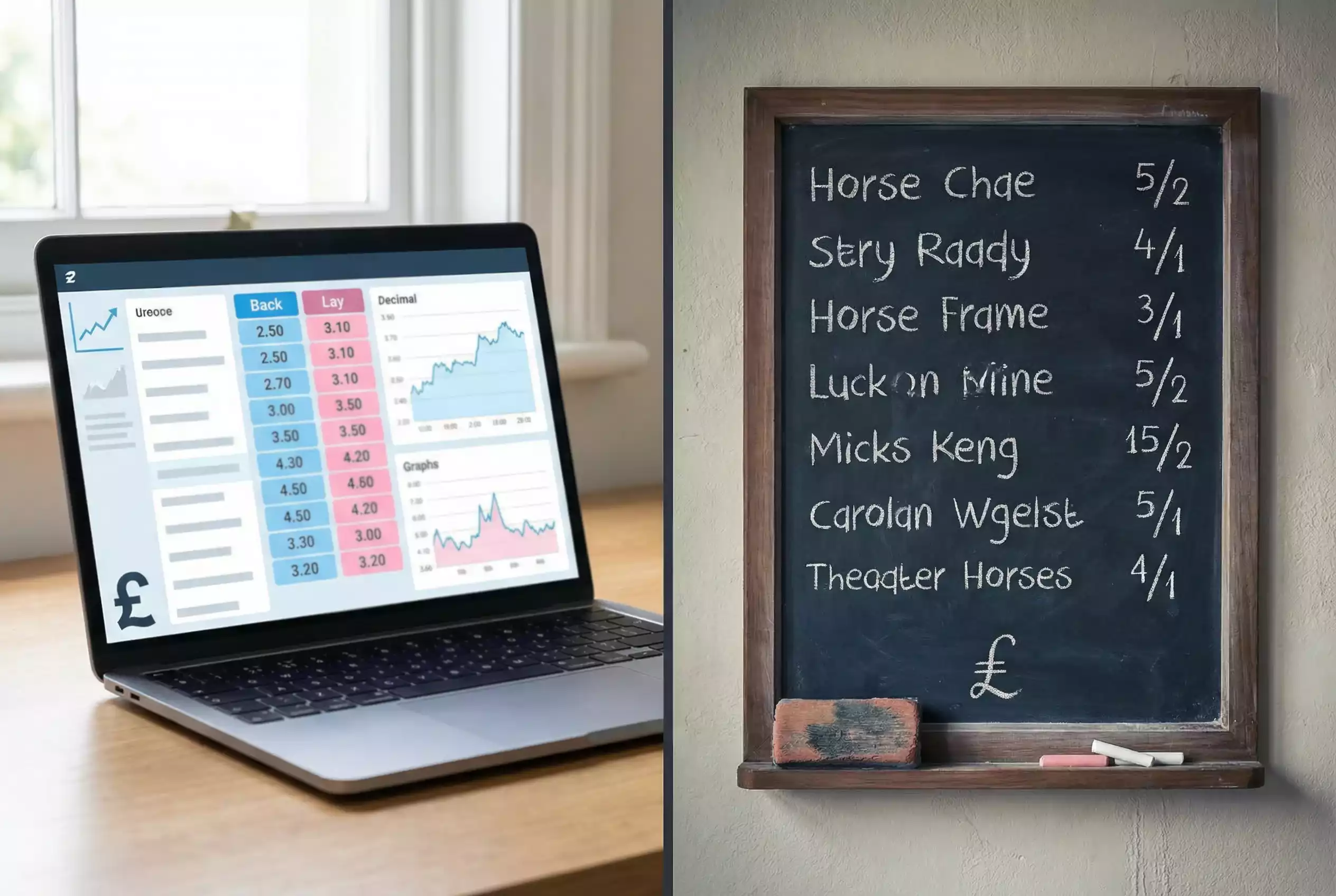
Two fundamentally different models power British horse racing betting. Traditional bookmakers set their own odds, accept your stake, and pay out (or profit) depending on results. Betting exchanges eliminate the middleman—punters bet directly against each other, with the exchange merely facilitating the transaction and taking a commission on winnings. Understanding both models helps you extract maximum value depending on circumstances.
Remote betting generated £2.4 billion in gross gambling yield between April 2023 and March 2024, according to Gambling Commission data. This figure encompasses both bookmaker and exchange activity, though traditional bookmakers capture the larger share. Exchanges carved out their niche by offering structural advantages that appeal to serious punters—better odds, the ability to bet against outcomes, and in-running trading capabilities that traditional betting couldn’t match.
For recreational punters placing occasional bets at standard prices, the distinction matters less. For anyone seeking long-term profitability, understanding when to use each model—and how to combine them—separates informed betting from recreational gambling. The economics differ more than the interfaces suggest.
Betting Exchanges vs Bookmakers — More on this topic at horse racing bets explained.
How Exchanges Work
A betting exchange matches opposing views. For every bet, there’s a backer (betting that an outcome will happen) and a layer (betting that it won’t). The exchange platform enables these two parties to find each other, agree on odds, and stake money accordingly. Neither party deals with the exchange directly on risk—only with each other.
Backing and Laying
When you “back” a horse at an exchange, you’re betting it will win—identical to a traditional bookmaker bet. When you “lay” a horse, you’re betting it will lose. Laying effectively means you’re acting as the bookmaker for that bet, accepting someone else’s stake and paying out if the horse wins.
The liability on a lay bet differs from the stake. If you lay a horse at 5.0 (4/1 in fractional terms) for £10, you’re accepting £10 from a backer. If the horse loses, you keep that £10 (minus commission). If it wins, you pay the backer their £10 stake plus £40 profit—your liability is £40, not £10. This asymmetry catches new exchange users off guard. Always check your maximum liability before confirming lay bets.
Matching Bets
Exchange betting requires counterparties. Unlike bookmakers—who accept your bet unilaterally—exchanges can only match your bet if someone is willing to take the opposite side at your price. This means bets can go “unmatched” if your odds are out of line with the market. You can request better odds than currently available and wait for someone to match, or accept the best currently available price for immediate matching.
Liquidity describes how much money is available to match at various prices. High-profile races have deep liquidity—millions of pounds available across the price range. Smaller meetings might have thin liquidity, meaning large bets move the market or go partially unmatched. Check available volume before assuming you can stake freely.
Commission Structure
Exchanges charge commission on net winnings rather than building margin into the odds themselves. Standard commission runs 2-5 percent depending on the exchange and your account status. This represents significantly less drag than the 10-20 percent overround typically built into bookmaker markets. If you win £100 on a bet and pay 5 percent commission, you net £95. You pay nothing on losing bets—commission applies only to profits.
Frequent users often qualify for reduced commission rates. High-volume accounts might pay 2 percent instead of 5 percent, improving margins further. Some exchanges also offer loyalty schemes or points systems that effectively rebate commission costs over time.
In-Running Markets
Exchange markets remain open during races (in-running), with prices updating continuously as the event unfolds. This creates trading opportunities: backing a horse at 5.0 before the race, then laying at 2.0 when it’s travelling well, locks in profit regardless of the result. Traditional bookmakers offer limited in-running betting on racing; exchanges pioneered the concept and remain more sophisticated.
Exchange Advantages
Several structural features make exchanges attractive for serious punters. These advantages compound over time, making the model particularly relevant for anyone betting regularly.
Better Odds
Without a bookmaker’s overround baked into prices, exchange odds tend to be more favourable. The difference varies by race and market conditions, but back prices on exchanges typically beat bookmaker equivalents by 2-5 percent on well-fancied runners. On longer-priced horses where bookmakers apply wider margins, the differential can be larger still. Over hundreds of bets, this edge translates into meaningfully better returns.
Ability to Lay
Traditional betting is one-directional: you back something to win. Exchanges let you profit from horses losing. This opens strategies unavailable elsewhere. If you’ve identified an overbet favourite with vulnerabilities, you can lay it rather than trying to identify which specific rival will beat it. The lay wins as long as your selection doesn’t win—you’re backed by the entire rest of the field.
Trading Positions
Because exchange markets stay open in-running, you can trade bets like financial positions. Back a horse at 6.0 before the race. If it travels well, lay it at 3.0 mid-race. You’ve guaranteed profit regardless of the result, though you’ve capped your upside. This “greening up” transforms betting from gambling into trading—different skills, different psychology, different risk profile.
No Account Restrictions
Bookmakers restrict winning accounts. It’s standard industry practice: if you consistently beat their prices, your stakes get limited to trivial amounts. Exchanges don’t have this problem—they welcome winning punters because every winner means a corresponding loser also using the platform, both generating commission. Professional bettors gravitate toward exchanges partly because they can continue staking meaningfully even after demonstrating edge.
Market Transparency
Exchange markets display all available back and lay prices with the money waiting to be matched at each price. This transparency reveals market sentiment more clearly than bookmaker odds, which might not reflect true market balance. Watching exchange price movements provides information about where the smart money is flowing—useful intelligence even if you ultimately bet elsewhere.
When to Use Each
Neither model dominates universally. Different circumstances favour different approaches, and many sophisticated punters maintain accounts with both exchanges and traditional bookmakers, switching between them according to specific advantages.
Use Bookmakers When…
Best Odds Guaranteed applies. BOG means you get the better of your price or Starting Price—a valuable uplift when horses drift. Exchanges don’t offer BOG because there’s no bookmaker to absorb the cost. On races where significant SP drift is likely (perhaps you’ve identified a gambled horse whose support will disappear), bookmaker BOG provides insurance exchanges can’t match.
Promotions add value. Extra places, faller insurance, money-back specials, and other promotional offers occasionally tip the mathematics toward bookmakers even on worse base odds. Calculate the effective odds including promotion value before assuming exchanges are cheaper.
Each-way betting suits your approach. Exchange each-way options exist but are clunkier—you typically place separate win and place bets rather than a single each-way stake. If you’re backing long-shots for place value specifically, bookmaker place terms with promotional enhancements may offer simpler, better value.
Use Exchanges When…
You want pure price without overround. For backing short-priced horses in particular, exchange odds beat bookmaker equivalents reliably. The smaller the odds, the more the bookmaker’s margin compounds into meaningful price differences.
You want to trade or lay. These capabilities simply don’t exist at traditional bookmakers. If your strategy involves backing and laying the same horse, or profiting from horses losing rather than winning, exchanges are your only option.
You’ve been restricted elsewhere. If bookmakers have limited your stakes, exchanges provide continued access to serious betting. Commission costs may be higher than you’d pay elsewhere, but any access beats no access.
The Hybrid Approach
Many experienced punters compare prices for each bet, using whichever model offers better value. Check the exchange price, factor in commission, compare to bookmaker price plus any applicable promotion. The few seconds of comparison often saves pounds over the long term. Apps that display both prices simultaneously make this process efficient.
See also Lay Betting Explained.
