
 Available in US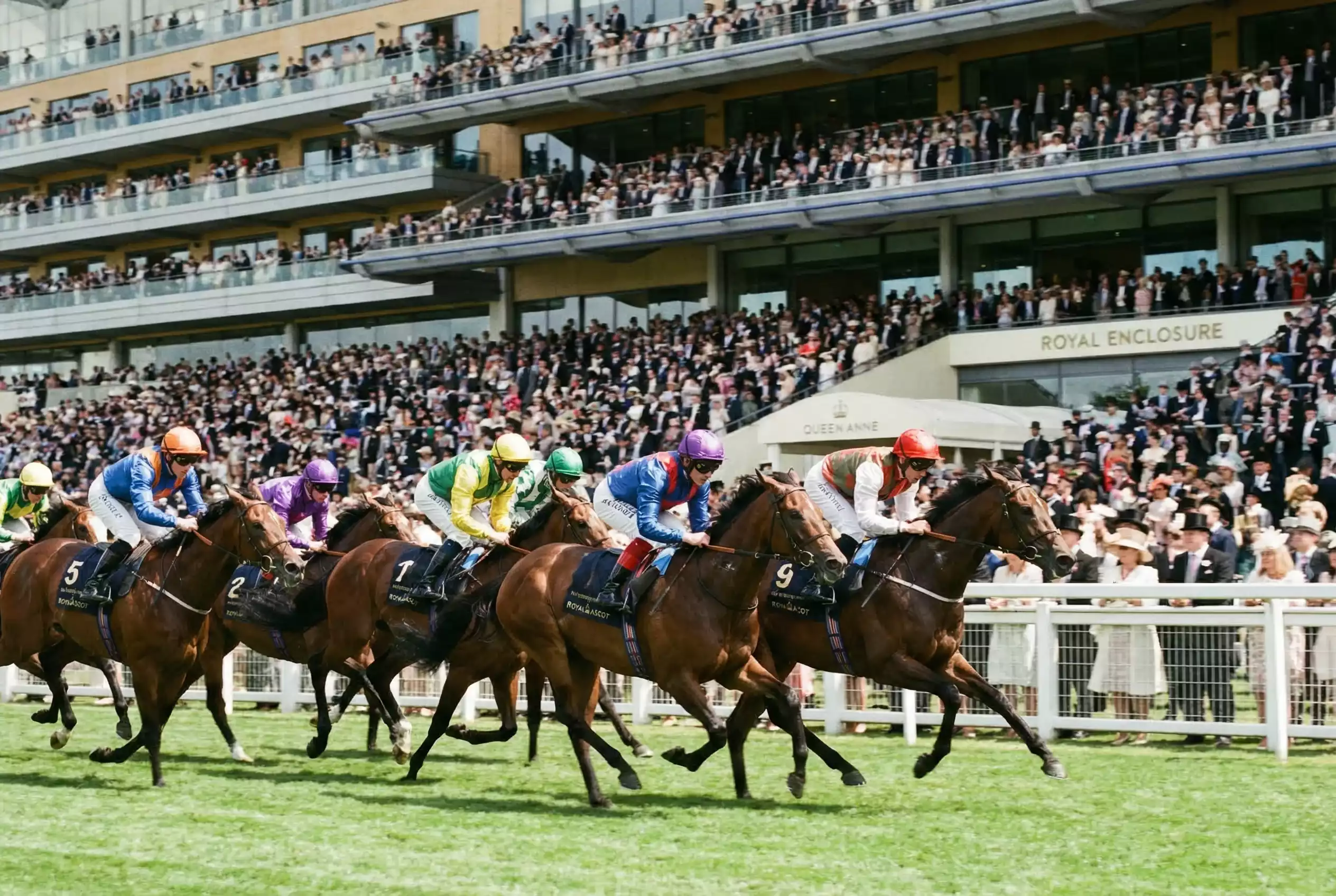
Royal Ascot represents flat racing’s championship week—five days in June where Group 1 quality meets heritage pomp, and where the betting market depth reflects global interest. Unlike jump racing’s Cheltenham, where British and Irish form dominates, Royal Ascot attracts serious raiders from France, America, Japan, Australia, and the Middle East. This international dimension adds complexity to form analysis but also creates pricing inefficiencies when European bookmakers underrate visitors, or vice versa.
The meeting contributes significantly to British racing’s £4.1 billion annual economic impact, drawing substantial betting volume across both prestige races and heritage handicaps. Where Cheltenham excels at championship events, Royal Ascot provides extraordinary each-way value in its cavalry-charge handicaps—races featuring twenty-five or thirty runners where enhanced place terms and competitive fields create genuine opportunities.
This guide focuses on practical Ascot betting: identifying which handicaps offer the best structural value, understanding how place terms operate during the Royal meeting, and developing strategies that account for the unique characteristics of this course. The Royal procession and morning suits might grab the cameras, but the betting markets deserve your attention.
Royal Ascot Betting Guide — More on this topic at horse racing bets explained.
Big-Field Handicaps
Three heritage handicaps anchor the Royal Ascot betting calendar: the Royal Hunt Cup, the Wokingham Stakes, and the Britannia Stakes. Each attracts maximum fields (typically thirty runners), triggers enhanced each-way terms, and produces annual headlines about outsider success. Understanding their different characteristics helps target your approach.
Royal Hunt Cup
Run over a mile on Wednesday, the Hunt Cup demands balanced attributes—sufficient speed to hold position, stamina to see out the straight mile, and the tactical flexibility to handle a cavalry charge. The straight mile at Ascot suits horses that can travel smoothly before quickening, though pace biases vary with ground conditions. In soft ground, racing prominently becomes advantageous; on quick going, closers from off the pace fare better. Check prevailing conditions before the race and cross-reference with your selection’s running style.
Wokingham Stakes
Six furlongs on Saturday afternoon, the Wokingham is pure speed chaos. Thirty sprinters charging down the straight course creates genuine randomness—form has predictive value, but the nature of sprint handicaps introduces variance that even the best analysis can’t eliminate. The draw becomes paramount. Ascot’s straight course has historically favoured high numbers (towards the stands rail) on good ground, though significant track work has reduced this bias in recent years. Study draw statistics for the specific ground forecast before finalising selections.
Britannia Stakes
A mile handicap restricted to three-year-olds, the Britannia often features lightly raced improvers who may be ahead of their handicap mark. This creates value propositions: horses entering off one or two runs who shaped better than bare form suggests. The restricted age profile also means shorter form lines—harder to analyse definitively but also harder for the market to price accurately. Trainers with strong Royal Ascot records (Aidan O’Brien’s Ballydoyle operation, John and Thady Gosden, William Haggas) merit particular attention; they target this meeting specifically and prepare horses accordingly.
Each of these races rewards different approaches to selection and staking. The commonality lies in their large fields and enhanced terms—structural advantages worth exploiting annually.
Ascot Place Terms
Standard place terms apply at Royal Ascot as elsewhere: four places at quarter odds for handicaps with sixteen or more runners. Given that heritage handicaps regularly attract thirty runners, this baseline provides reasonable coverage. However, bookmaker competition during Royal week typically extends terms significantly.
For the flagship handicaps—Hunt Cup, Wokingham, Britannia—expect operators to advertise five, six, or even seven places in the lead-up. The pattern mirrors Grand National week: firms competing for market share by offering increasingly generous terms. Your task is comparison shopping. Note which operators enhance to six places versus seven, which retain quarter odds throughout versus dropping to fifth odds, and crucially, which apply meaningful stake caps that limit practical value.
The mathematics of enhanced places favours longer-priced selections. If you’re backing a 25/1 shot in the Wokingham with seven places at quarter odds, the place element pays 25/4 = 6.25 to 1 if the horse finishes anywhere from second to seventh. That’s meaningful insurance against the vagaries of a thirty-runner sprint. If you’re backing an 8/1 shot, the place element (8/4 = 2/1) provides less coverage proportionally—though obviously the win probability justifies the shorter price.
Group races at Royal Ascot follow standard terms without enhancement. The Gold Cup, St James’s Palace Stakes, and other championship events attract smaller fields (typically eight to sixteen runners) and don’t trigger the generous handicap provisions. These races are win-only propositions unless you’re backing a genuine outsider where the place fraction provides meaningful value.
One nuance worth noting: some enhanced place offers specify “each-way extra” rather than extending standard terms. Under this structure, you place a separate additional stake on enhanced places rather than receiving them automatically. The cost differs, and the value calculation changes. Read terms carefully before assuming all “extra places” offers work identically.
Royal Ascot Strategy
Racing’s governing bodies employ over 20,000 people across Britain’s fifty-nine licensed racecourses, and Royal Ascot week generates a disproportionate share of annual activity. As Anne Lambert CMG, interim chair of the Horserace Betting Levy Board, noted: “Racing is facing significant challenges” despite generating record Levy yields. As outlined in a Countryside Alliance briefing, major meetings like Royal Ascot are increasingly important for revenue generation. The betting market responds accordingly, with intense competition creating opportunities for prepared punters.
Draw Bias
Ascot’s straight course runs slightly uphill before levelling near the finish. The stands rail (high draw numbers) has historically offered a marginal advantage, particularly on faster ground where runners can save ground against the rail. On soft ground, this bias often reverses as the rail becomes churned. Check recent meetings for draw data, noting ground conditions, before applying any bias to selections. The round course (used for the Gold Cup and other staying races) presents different challenges—wide draws on the round course require more ground to be covered but don’t carry the same significance as in straight-course sprints.
Going Preferences
June weather varies from scorching to saturated. Horses with strong preferences for particular ground conditions gain or lose significantly depending on what develops. Don’t commit stakes to ground-dependent selections until the official going is declared—or at minimum until you can assess weather forecasts with reasonable confidence. Early-week bets on Friday or Saturday races carry ground uncertainty; waiting for race morning provides information at the cost of potentially shorter prices.
International Form
Royal Ascot attracts raiders. French runners historically perform well, particularly in staying races and softer ground conditions. American turf runners have improved their strike rate as trainers understand Ascot’s demands better. Japanese challengers are less frequent but formidable when targeted specifically. The bookmakers have grown more sophisticated at pricing international form, but inefficiencies still exist—particularly when multiple raiders from one country compete against each other, confusing the market about where the real threat lies.
Timing Your Bets
Ante-post markets open months before Royal Ascot, with prices generally shortening as the meeting approaches for fancied runners. However, the value window differs from jump racing festivals. Flat horses have more options, and trainers often leave Ascot targets ambiguous until close to declarations. Committing early to a specific race when a horse might run elsewhere carries risk. The safer approach: identify horses you want to follow, note their entries, but hold stakes until the week before when final targets crystallise. Race-morning markets then offer confirmed runners and overnight intelligence, though at compressed odds for proven form.
See also Cash Out Betting Explained.
