
Best Horse Racing Betting Sites – Bet on Horse Racing in 2026
Loading...
Introduction
Pool betting predates the modern bookmaker by decades. When punters backed horses in the early days of British racing, their money went into a pool, and winners divided the proceeds after a deduction for expenses and profit. The Tote — Britain’s official pool betting operator — formalised this system in 1928, and pool betting has remained a fixture of British racing ever since.
The fundamental difference between pool betting and fixed-odds bookmaking lies in how dividends are calculated. With a bookmaker, you know your potential return at the moment you place the bet. With the Tote, you don’t. Your return depends on how much money entered the pool and how many other punters backed the same horse. This uncertainty creates distinctive dynamics: outsiders can pay spectacularly when few others backed them, while popular selections sometimes return less than bookmaker odds would have offered.
The UK gambling industry continues to grow overall. According to Gambling Commission data, total Gross Gambling Yield reached £15.6 billion in 2024-25, a 3.5% year-on-year increase. Pool betting represents a small fraction of this total, but it maintains a devoted following among punters who appreciate its communal structure and the potential for outsized returns on correct selections.
This guide examines how the Tote operates, then focuses on its most popular products: the Placepot, Quadpot, and Scoop6. These pools combine multiple races into single wagers, challenging punters to find placed horses or winners across extended sequences. We’ll compare pool betting against traditional bookmakers and outline strategies for maximising value from pool participation.
How the Tote Works
The Tote pools all bets on a race together, deducts its operating margin, then distributes the remainder among winning punters. Your return — the dividend — depends not on pre-set odds but on the collective betting behaviour of everyone who wagered.
Pool Formation and Deductions
Money flows into separate pools for different bet types. A Tote Win pool collects stakes from all punters backing horses to win. A Tote Place pool collects stakes from those backing horses to place. Exacta, Trifecta, and other exotic pools operate similarly.
Before dividends are calculated, the Tote deducts a percentage from the pool. This deduction covers operating costs and generates the operator’s profit. Deduction rates vary by bet type, typically ranging from 13% to 29%. Lower deductions apply to simple win and place bets; higher deductions apply to more complex exotics where calculation and administration costs rise.
“Racing is facing significant challenges so I am delighted to report that in 2024/25 the Board’s expenditure supporting Racing was £94.3m, a 4% increase on the previous year,” noted Anne Lambert CMG, Interim Chair of the Horserace Betting Levy Board. This funding flows partly from betting activity including pool betting, demonstrating how the betting ecosystem supports the sport itself.
Dividend Calculation
After deductions, the remaining pool is divided among winning unit stakes. If the Win pool totals £10,000 after a 16% deduction (leaving £8,400), and £2,100 was staked on the winning horse, each £1 unit returns £4. The dividend is declared to a £1 stake, so a £5 bet returns £20.
The dividend isn’t known until betting closes, which usually happens as the race starts. Approximate dividends are displayed during betting to guide punters, but these are estimates that shift as late money enters the pool. Final dividends can differ substantially from estimates when significant late bets arrive.
Tote Win and Place
Tote Win operates identically to a bookmaker win bet — your horse must finish first. The difference is purely in how returns are calculated.
Tote Place pays if your horse finishes in the places. The number of places mirrors standard bookmaker terms: typically two places for five to seven runners, three for eight to fifteen, and four for sixteen-plus. Unlike bookmakers, where place odds are a fraction of win odds, the Tote calculates place dividends from the separate place pool. Sometimes this delivers better value than bookmaker place odds; sometimes worse.
Tote Exacta and Trifecta
The Exacta requires predicting the first two horses in correct order. The Trifecta extends this to the first three. These pools typically carry higher deductions but can produce large dividends when results surprise the majority of punters.
Combination bets (also called permed or boxed bets) allow you to cover multiple permutations within these pools. An Exacta combination of three horses covers all six possible first-and-second combinations. If any of your horses finishes first and another finishes second, you win — but your stake is multiplied by the number of permutations covered.
Placepot: The Six-Race Challenge
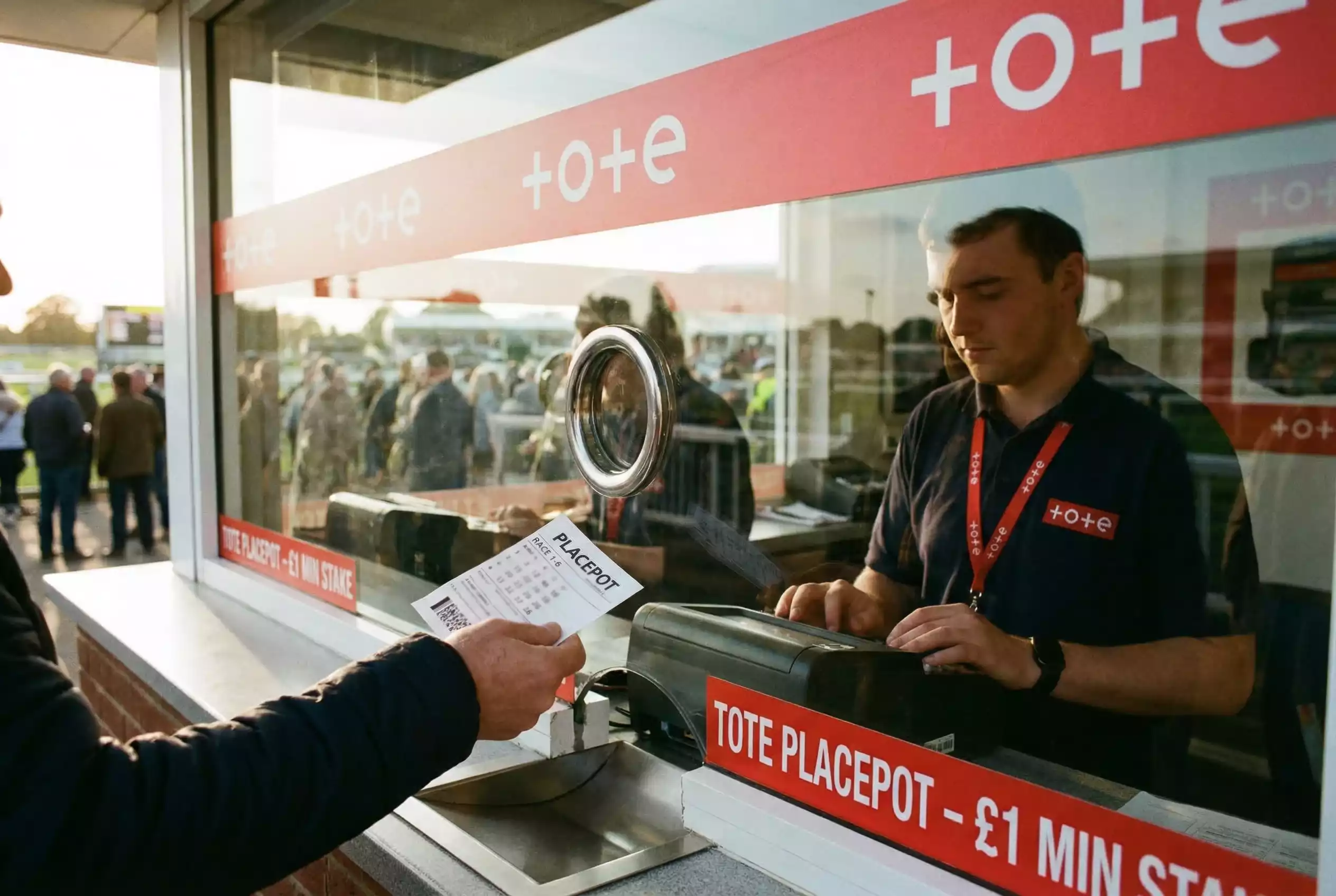
The Placepot is the Tote’s flagship multi-race pool. To win, you must pick a horse to place in each of the first six races at a meeting. Find six placers and you share the pool with other successful punters. Miss one, and you lose your entire stake.
How the Placepot Works
Before racing begins, you submit selections for races one through six. Each selection must place (finish in the paid positions) for your stake to survive to the next leg. After each race, survivors carry forward. Those who picked an unplaced horse are eliminated.
Minimum stake is typically ten pence per line. A “line” represents one combination of selections. If you select one horse per race, you have one line at ten pence. Selecting two horses in one race doubles your lines to two (at ten pence each, totalling twenty pence). The mathematics compounds: two selections in each of six races means 2 × 2 × 2 × 2 × 2 × 2 = 64 lines, costing £6.40 at minimum stake.
Dividend Calculation
The pool grows throughout the day as punters add bets. After the sixth race, the surviving stakes divide the pool. If many punters survive, dividends may be modest. If few survive — perhaps because a shock result eliminated the majority — dividends can reach hundreds or even thousands of pounds to a £1 stake.
Major meetings generate larger pools and more predictable dividends. Cheltenham Placepots regularly exceed £500,000; a typical midweek meeting might pool £20,000. Larger pools generally produce smaller dividend swings because more punters participate and survivor numbers tend toward higher figures.
Strategy Considerations
Banker selections — horses you think will certainly place — reduce your line count and stake. Banking one horse in leg three while selecting two in other legs drops your total combinations. The risk: if your banker fails, your entire Placepot is eliminated.
Covering more horses in each leg increases survival probability but escalates stake exponentially. Three selections per leg across six races creates 729 lines — £72.90 at minimum stake. Most punters balance coverage and cost by banking strong fancies and covering uncertainty in competitive races.
According to OLBG/YouGov data, 17% of UK adults planned to bet on the Grand National 2025. Many of these occasional punters engage with pools like the Placepot precisely because the small stake, communal structure, and potential for large returns suits recreational participation. The Placepot offers involvement across an afternoon’s racing without requiring deep form analysis for every race.
Quadpot: Races Three to Six
The Quadpot mirrors the Placepot but covers only the final four races of a meeting (races three through six). Fewer legs mean lower stakes for equivalent coverage, smaller pools, and different strategic considerations.
How the Quadpot Differs
With only four legs instead of six, the Quadpot requires fewer correct selections. The same ten-pence-per-line minimum applies. Selecting one horse per race costs forty pence for four lines; selecting two horses per race costs £1.60 for sixteen lines.
Quadpot pools are typically smaller than Placepots at the same meeting. Many punters prefer the flagship product, and the reduced leg count means less accumulation of eliminated stakes feeding the dividend. Conversely, the shorter sequence increases the probability of successful completion, which tends to increase the number of winners sharing the pool.
When Quadpot Makes Sense
The Quadpot suits punters who arrive late, missing the window to enter the Placepot before race one. Rather than sitting out pool betting entirely, the Quadpot provides an entry point for the afternoon’s remaining action.
It also suits punters who find the first two races of a card uninviting. If races one and two feature uncompetitive events or races you can’t assess, skipping them for the Quadpot focuses your stakes on races where you have genuine opinions.
Risk-Reward Comparison
The Quadpot carries lower variance than the Placepot. Four legs instead of six means fewer opportunities for elimination but also fewer multiplying effects when prices combine. A successful Quadpot typically returns less than a successful Placepot on the same card because the pool is smaller and the survival rate higher.
For punters prioritising entertainment over maximum upside, the Quadpot delivers more frequent wins at smaller amounts. For those chasing the big dividend, the Placepot’s additional complexity and larger pools offer greater potential reward. Both can feature in a balanced pool betting approach depending on the day’s circumstances.
Scoop6: The Big-Prize Pool
The Scoop6 is the Tote’s marquee product, run on selected Saturdays throughout the year. Unlike the Placepot, the Scoop6 requires picking winners — not just placed horses — in six designated races. The combination of win-only requirements and jackpot structure creates the potential for life-changing dividends.
Scoop6 Structure
Each Saturday, the Tote designates six races across different meetings as Scoop6 legs. These are typically competitive handicaps and feature races that attract significant betting interest. Punters must pick the winner of each leg.
Minimum stake remains ten pence per line. The difficulty of finding six winners from six races means permutation betting is common, but line counts escalate rapidly. Three selections per leg creates 729 lines at £72.90 minimum.
Win Fund and Bonus Fund
The Scoop6 pool divides into two components. The Win Fund pays punters who successfully identify all six winners. This is the primary payout, distributed among all winning tickets.
The Bonus Fund offers additional reward. Winners from the main pool are invited to select a horse in a designated race the following week. If that selection wins, the Bonus Fund is divided among those who picked correctly. The Bonus Fund accumulates when no one qualifies, creating rollover jackpots that can reach substantial amounts.
Rollover Mechanics
When no punter finds all six winners, the Win Fund rolls over to the following week. This jackpot effect attracts increased participation, as larger pools draw punters seeking the accumulated prize. Historic Scoop6 rollovers have reached figures exceeding £2 million, transforming the bet from a weekend flutter into a genuinely significant prize opportunity.
Even partial success generates returns in rollover weeks. Consolation dividends pay punters who found five of six winners, ensuring that near-misses aren’t entirely unrewarded during jackpot periods.
Scoop6 Versus Accumulators
A six-horse accumulator with a bookmaker requires the same achievement — six consecutive winners — but pays at fixed odds determined at the time of betting. The Scoop6’s pool structure means final dividends depend on how many others succeeded.
When few punters solve the puzzle, Scoop6 dividends can massively exceed what accumulator odds would have delivered. When many solve it, the shared pool may return less than the fixed-odds equivalent. This uncertainty appeals to punters who enjoy the communal aspect of pool betting and the drama of watching survivor numbers dwindle through the afternoon.
Tote vs Bookmaker: Pros and Cons
Choosing between pool betting and fixed-odds bookmaking involves trade-offs. Neither approach dominates in all circumstances; optimal choice depends on the specific race, your selections, and your betting objectives.
Fixed Odds Certainty
Bookmakers offer price certainty. When you back a horse at 8/1, you know exactly what winning returns. This clarity suits punters who want to assess risk-reward before committing stakes. There’s no dividend fluctuation, no late money shifting your return.
Against: bookmaker prices build in margin on every selection. The overround ensures the book profits regardless of outcome. When you take a bookmaker price, you’re accepting odds set to favour the layer over time.
Tote Dividend Potential
The Tote offers upside when public money concentrates on the wrong horses. If you’ve found value that others missed, the dividend can substantially exceed what bookmakers were offering. Outsiders that win produce exceptional dividends precisely because few punters backed them.
Against: when your selection is popular, the dividend may disappoint. Heavy public support on a winner means many tickets sharing the pool. A horse that paid 4/1 with bookmakers might return just 3.50 to £1 on the Tote when it attracted disproportionate pool money.
Comparative Analysis
Gambling Commission data shows that remote betting generated £2.4 billion in Gross Gambling Yield between April 2023 and March 2024. Pool betting represents a fraction of this total, with fixed-odds bookmaking dominating the market. However, pool products maintain dedicated participation because they offer experiences that bookmakers cannot replicate.
The communal aspect differentiates pools. When you enter a Placepot, you’re competing against other punters rather than against a bookmaker. Success depends on your judgment relative to the crowd. This appeals to punters who enjoy the skill element of spotting selections others missed.
When to Choose the Tote
Consider the Tote when backing horses that lack public support. If you’ve identified an outsider through form analysis that the casual betting public hasn’t noticed, the pool dividend may reward your insight more generously than a bookmaker price that already reflects the horse’s real chances.
Consider bookmakers when backing popular horses. A well-supported favourite typically pays better at fixed odds than in a pool where many tickets share the pot. Best Odds Guaranteed offers further protection, ensuring you receive the best available price regardless of market movements.
Combining Both Approaches
Many punters use both channels. Win and each-way bets go through bookmakers where price certainty and BOG add value. Pool bets provide different exposure — the Placepot for afternoon-long involvement, the Scoop6 for jackpot chasing. This combination captures advantages from each structure while diversifying betting activity across different risk profiles.
Pool Betting Strategies
Successful pool betting requires different thinking than fixed-odds wagering. You’re not just picking horses likely to win or place — you’re also considering how other punters will bet and how your selections relate to the crowd’s choices.
Banking Strong Selections
A “banker” is a selection you back in just one combination per leg, reducing overall line count. If you’re confident about leg three but uncertain elsewhere, banking your leg-three selection while permuting alternatives in other legs keeps stakes manageable.
Bankers carry absolute risk: if they fail, your entire pool bet dies. Reserve banker status for selections where place or win confidence is genuinely high — not merely hopes that feel optimistic. The mathematical efficiency of banking only helps when bankers deliver.
Spreading Risk Intelligently
The opposite approach — covering multiple horses in each leg — increases survival probability at the cost of escalating stakes. The key is identifying which legs warrant coverage and which don’t.
Competitive handicaps with many plausible place candidates deserve broader coverage. Non-competitive maidens where a short-priced favourite towers over weak opposition might merit a single selection. Matching coverage to race competitiveness preserves capital for legs where uncertainty genuinely exists.
Permutation Economics
Line counts multiply across legs. Understanding this multiplication helps you calculate total outlay before committing. A Placepot with selections of 1-2-1-3-2-2 creates: 1 × 2 × 1 × 3 × 2 × 2 = 24 lines. At ten pence minimum, that’s £2.40. At fifty pence per line, it’s £12.
Running this calculation before entering the bet prevents stake surprises. It also reveals opportunities to trim line counts. Dropping from three selections to two in a single leg halves your lines. If the third selection was marginal anyway, that discipline saves money for more valuable coverage elsewhere.
Targeting Value Dividends
When the public heavily backs obvious favourites, value shifts to alternatives. A Placepot where all favourites place divides the pool among many surviving tickets, producing modest dividends. A Placepot where one or two favourites fail eliminates competition, boosting returns for survivors who backed alternatives.
This doesn’t mean blindly opposing favourites. It means recognising that including genuine outsiders with placing chances — horses the crowd underrates — increases your dividend when they come through. Form study identifies these value selections; pools reward you for finding them.
Budget Management
Pool betting can consume significant stakes through permutation creep. Set a budget before studying the card, then build your bet within that constraint. A ten-pound pool betting budget at a meeting might fund one medium-coverage Placepot and one banker-heavy Quadpot. Trying to cover every possibility across both products would require far more.
The HBLB notes that £67 million was distributed as prize money and £19.4 million for Raceday Services in 2024/25 — funds that ultimately trace back to betting activity including pools. Understanding your place in this ecosystem means betting responsibly within means, treating pools as entertainment rather than income.
When Pools Offer Best Value
Large pools at major meetings provide liquidity that reduces dividend variance. Small pools at minor meetings can swing wildly — a single large bet on your selection could devastate the dividend, while unexpected outcomes might create enormous payouts. Match your pool participation to the pool size: major meetings for consistent play, minor meetings only when seeking high-variance opportunity.
Ultimately, pool betting rewards punters who think differently. It’s not enough to find horses that will place; you must find horses that will place and that others have undervalued. This dual requirement makes pool betting intellectually engaging beyond simple form assessment. Success requires understanding the crowd — and betting where the crowd is wrong.